Step into the magical world of amusement parks, where towering steel structures create moments of pure joy and wonder. How does a ferris wheel work, you ask? The answer lies in a delicate dance of physics and engineering, where gravity and mechanics intertwine to lift you to the sky. As you settle into your seat and the wheel begins to turn, prepare to be swept away on a journey of whimsy and delight. Join me as we unravel the enchanting mechanics behind the iconic ferris wheel experience.

How Does a Ferris Wheel Work: An Exciting Adventure in Amusement Engineering
Welcome, young explorers, to a fascinating journey into the heart of amusement park engineering as we uncover the secrets behind the magical spinning wonder known as the Ferris Wheel! Have you ever gazed in awe at the towering structure of a Ferris Wheel and wondered how it all works? Join us as we delve into the mechanics, history, and science behind this iconic ride that has been captivating thrill-seekers for generations.
The History of the Ferris Wheel
Before we dive into the mechanics of how a Ferris Wheel works, let’s take a step back in time to learn about its fascinating history. The Ferris Wheel was invented by the brilliant engineer George Washington Gale Ferris Jr. in the late 19th century. Mr. Ferris designed the first Ferris Wheel for the 1893 World’s Columbian Exposition in Chicago as a spectacular attraction that would rival the Eiffel Tower, which wowed audiences at the 1889 Paris World’s Fair.
Mr. Ferris’s creation was a monumental success, standing at a towering height of 264 feet and consisting of 36 wooden passenger cars that could each hold up to 60 people. The Ferris Wheel quickly became a symbol of innovation and entertainment, captivating visitors with its breathtaking views and smooth, circular motion.
The Basic Mechanics of a Ferris Wheel
Now, let’s unravel the mystery behind how a Ferris Wheel actually works. At its core, a Ferris Wheel is a giant rotating wheel with passenger cars attached to its rim. The wheel rotates around a central axis, allowing passengers to enjoy a leisurely ride high above the ground. But how does this magnificent structure stay balanced and keep spinning smoothly?
The Support Structure
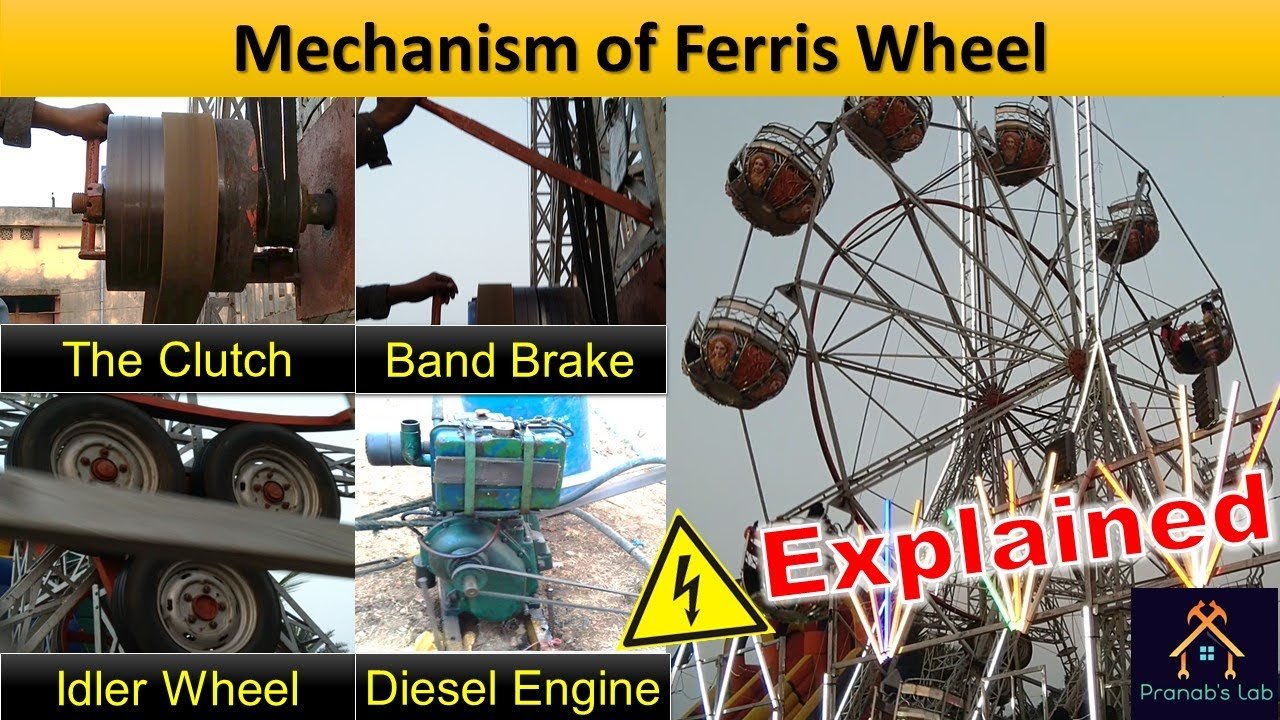
The key to the stability and safety of a Ferris Wheel lies in its sturdy support structure. The central axis of the wheel is connected to a massive support frame that anchors the entire structure to the ground. This support frame is carefully engineered to distribute the weight of the wheel and passengers evenly, ensuring that the Ferris Wheel remains upright and secure throughout its operation.
The Rotational Mechanism
As passengers board the Ferris Wheel and the ride begins, a powerful motor kicks into action to rotate the wheel along its axis. This motor, usually located at the base of the wheel, provides the necessary force to propel the wheel in a controlled and smooth motion. The rotational mechanism of the Ferris Wheel is designed with precision to maintain a consistent speed and ensure a gentle ride experience for all passengers.
The Passenger Cars
One of the most exciting aspects of riding a Ferris Wheel is stepping into the cozy passenger cars that offer a bird’s-eye view of the surroundings. These cars are securely attached to the rim of the wheel and are designed to swing slightly as the wheel rotates, giving passengers a thrilling sensation of movement and freedom.
The passenger cars of a Ferris Wheel are equipped with safety features such as sturdy railings, comfortable seating, and locking mechanisms to keep passengers secure during the ride. Each car is carefully balanced to distribute weight evenly and ensure a smooth ride for everyone on board.
The Physics Behind the Ferris Wheel
Now, let’s explore the fascinating world of physics that governs the motion of a Ferris Wheel. As the wheel rotates, passengers experience a combination of centripetal and gravitational forces that create the sensation of weightlessness and excitement.
Centripetal Force
Centripetal force is the inward force that keeps an object moving in a curved path. In the case of a Ferris Wheel, the centripetal force is provided by the rotation of the wheel around its axis. This force acts on the passenger cars, pulling them towards the center of the wheel and preventing them from flying off as the wheel spins.
Gravitational Force
Gravitational force, on the other hand, is the downward force exerted by the Earth on all objects. As passengers ride the Ferris Wheel, they experience the interplay between centripetal and gravitational forces, which creates the sensation of being lifted off the ground and floating in mid-air. This harmonious balance of forces is what makes the Ferris Wheel such a thrilling and enjoyable experience for riders of all ages.
And there you have it, young adventurers! The mesmerizing world of the Ferris Wheel has been unveiled before your eyes, revealing the intricate engineering, rich history, and captivating physics behind this beloved amusement park attraction. The next time you take a ride on a Ferris Wheel, remember the brilliant mind of George Washington Gale Ferris Jr. and the ingenuity that brought this iconic invention to life. May your future adventures be filled with wonder, excitement, and endless spins on the magical Ferris Wheel!
How Does A FERRIS WHEEL Work
Frequently Asked Questions
How does a Ferris wheel operate?
A Ferris wheel operates using a motor to turn a large vertical wheel. The wheel is attached to a system of gondolas or passenger cabins that are evenly distributed along the circumference of the wheel.
What powers the movement of a Ferris wheel?
Electric motors are commonly used to power the movement of a Ferris wheel. These motors are connected to the central axis of the wheel and provide the necessary torque to rotate the wheel and carry passengers in the gondolas.
How are passengers loaded and unloaded from a Ferris wheel?
Passengers are typically loaded and unloaded from a Ferris wheel either while the wheel is in a stationary position or while it is moving at a slow and controlled speed. The gondolas are usually equipped with doors that can be safely opened and closed for passenger access.
What keeps a Ferris wheel stable and safe for riders?
A Ferris wheel’s stability is maintained by its large supporting structure and the even distribution of weight from the passenger cabins. Additionally, safety features such as locking mechanisms on the gondolas and regular maintenance inspections help ensure a safe ride for passengers.
Final Thoughts
In conclusion, a Ferris wheel works by rotating around a central axis, with each passenger carriage attached to the wheel. The rotation is powered by a motor, transferring energy to the wheel’s axle. As the wheel turns, passengers experience a smooth, circular ride above the ground. Understanding how a Ferris wheel works enhances the appreciation of this iconic amusement park attraction.